


Enough of egoism.
As I sit in a restaurant in the city centre, a thought crosses my mind: egoism has become one of the “silent” illnesses of the 21st century. The “me first” movement, which was born as a necessary response to burnout, chronic stress and the pressures of capitalism, has in the meantime shifted into something else – into egocentricity, which far too often cuts bridges between us instead of building them.
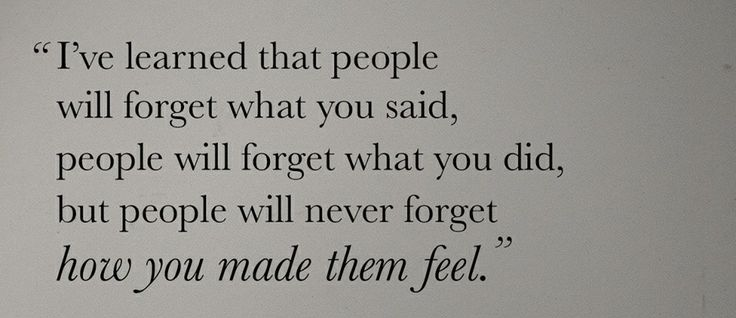
I’ve been saying for a long time that we, as Slovenians, don’t exactly have an excess of compassion for one another. You can see it in a mindset we all know: “As long as my neighbour has it worse than I do.” This sentence is not just a joke, it is a mirror. At the same time, we forget that as individuals in a society we wouldn’t survive for long on our own – we depend on every person we love to compare ourselves to.
We are dependent on people who grow our food, sew our clothes, take care of our health, drive buses, repair roads, collect rubbish, keep electricity and water running. Behind every system we take for granted stands a multitude of people doing this work quietly and invisibly. All of them as part of a larger community – a company, a municipality, a country. Without each one of these individuals, from medical staff to shop assistants, hospitality workers and communal workers, the system as we know it today simply would not exist.
And this is exactly why the philosophy “me and my needs are always first” hurts more and more. I’m not bothered by the fact that we take care of ourselves – I’m bothered when, on that path, we forget that we are not alone in this world.
Egoism in practice: from the street to Instagram
Egoism doesn’t always show up in big events – most often you catch it in small moments.
Have you ever noticed how rarely, in Slovenia, we let other drivers go ahead on the road? How often we close the space instead of opening it? When I visited Sarajevo last year, I was struck by how easy it was to merge into traffic and how often people made room for one another. At first glance a small thing, but in reality a reflection of a deeper awareness: “I am not alone on this road. I am part of a system that only works if we cooperate.”
And this is where the difference between egoism and a healthy sense of self begins – in the awareness that I am part of a whole that is not the same without me, but without others I am not the same person either.
Ubuntu: I am because we are
In recent
years, I’ve been repeatedly drawn to the philosophy of ubuntu. The concept is often summed up in the words: “I am because we are.”
Ubuntu reminds us that we do not exist in a vacuum. My identity, my well-being, my self – all of this is shaped in relationships, in community, in small everyday interactions. I am not just “me against the world”, but “me within the world”, within a network of relationships that can either support me or drain me.
When we look through this lens, it suddenly becomes clear how intertwined we really are. My actions affect you, yours affect someone else. The way I treat people in the shop, on the street or at work creates a climate in which we either all breathe a little easier – or a little harder.
Why we need community
Today, I want to remind you of the importance of community and mutual support. I’m not talking about the ideal, Instagram version of a “tribe”, but about the very real social circle that, in the most chaotic moments of our lives, holds our inner world together.
Think back to the feeling of being surrounded by people who truly supported you. Not only when you succeeded, but also when you didn’t. People who knew how to celebrate your wins and also stand through your losses. That feeling of warmth and softness when someone accepts you – not the “polished package”, but the authentic version, with all your fears, doubts and “mistakes”.
And maybe this is the small shift we need: everything you expect from other people, try to awaken in yourself as well. Compassion, gentleness, patience, the ability to listen. If we don’t activate these qualities within ourselves, we simply cannot share them with others.
How to be more compassionate towards others
Compassion is not a superpower you’re either born with or not. It’s a skill – something you can train, step by step.
A few simple starting points for everyday life:
- Micro-pause before reacting
Next time someone makes you angry – in traffic, in a queue or on the phone – take three slow breaths before you respond. This is a small but crucial space between stimulus and reaction, in which you can choose whether you go into attack, withdrawal, or connection. - Active listening instead of quick advice
When someone confides in you, try – just once – not to jump straight into “fixing mode”. Look at them, listen, and maybe say: “I hear you. I believe this is really hard for you.” Sometimes this is worth more than a whole list of solutions. - Mental shift: from judgment to curiosity
When someone’s behaviour throws you off, ask yourself: “What might be going on in the background for them to react like this?” You’re not excusing the behaviour, you’re simply interrupting automatic judgment and allowing a bit of curiosity. That alone can change the tone. - Small acts of kindness
Let someone go ahead of you in traffic. Text a friend: “I was thinking of you today.” Smile at the person at the checkout and really look them in the eyes. These tiny actions sometimes heal more than we’re willing to admit – both us and others.
Compassion for others always begins with compassion for yourself. When you stop beating yourself up for every mistake, the space you hold for other people becomes softer too.
Gratitude for people who know how to say “we”
Today, I look at my circle of people with a deep sense of gratitude. At those who don’t think only about what they get from a relationship, but also about what they bring into it. Who don’t see only themselves, but understand that we only grow as part of a community.
I’m grateful for everyone who supports me with empathy, especially in my authenticity – when I’m not perfect, when I’m tired, overwhelmed or “too much”. For everyone who knows that power always lies in “we” and not only in “me”.
Maybe it really is time that, as a society, we step at least a little away from the “only me” mentality and return to an older, almost forgotten truth:
I am because we are.
And maybe this is exactly where real “healing” begins – when we stop looking only at ourselves and start genuinely looking at one another.
Sources:
Kowalski, C. M., Kwiatkowska, M. M., & Rogoza, R. (2022). The bright and dark sides of egoism. Frontiers in Psychology, 13, 1025830. https://doi.org/10.3389/fpsyg.2022.1025830
Kuroda, Y., & Sakurai, S. (2024). The relationship between individualism/collectivism and mental health: Development of the Japanese version of the Auckland Individualism and Collectivism Scale. Pacific Rim International Journal of Nursing Research, 28(3), 145–161.
Bocian, K., Baryla, W., & Wojciszke, B. (2020). Egocentrism shapes moral judgments. Social and Personality Psychology Compass, 14(2), e12572. https://doi.org/10.1111/spc3.12572